Right, hands up if you’ve ever stood in a storage unit at 38 degrees, staring at a wall of identical cardboard boxes, wondering which one has your passport. Mate, we’ve all been there. Or we will be.
Renting space is the easy bit. The hard bit is getting to your stuff three months later without unpacking half your life onto the floor. That’s what an access plan solves. It’s a simple system that decides what goes where, how often you’ll need it, and how you’ll find it in less than two minutes.
At Simple Storage, we see a lot of units, and the neat ones all have one thing in common. Somebody planned the access before they planned the packing. Here’s how to do the same.
Why Storage Unit Organisation Matters More in Abu Dhabi
Anywhere in the world, a messy unit wastes time. In Abu Dhabi it also wastes comfort. The heat and humidity mean nobody wants to spend an hour wrestling a sofa out of the way to reach a box of winter clothes.
Abu Dhabi also has its own storage patterns. Expats come and go on contract cycles. Villas get renovated. Families downsize from a Khalifa City villa to an Al Reem apartment. Businesses outgrow their back offices. A good plan helps with every one of these, whether you’re using a full moving and storage service in Abu Dhabi or just parking a few boxes for the summer.
When your unit is organised around access, you get:
- Faster retrieval, so you’re in and out instead of sweating through a treasure hunt
- Less damage, because you aren’t climbing over fragile items
- A smaller unit, since smart stacking uses vertical space properly
- Lower cost, because a right-sized unit is a cheaper unit
Step 1: Work Out How Often You’ll Actually Visit
Before you touch a single box, ask one honest question: how often will I need this?
Sort everything into three tiers:
- Weekly or monthly access: work files, seasonal gear, sports equipment, things you rotate
- A few times a year: winter clothes, holiday décor, spare appliances, kids’ outgrown-but-might-need items
- Rarely or never: heirloom furniture, archived records, items waiting for a future home
The tier decides the location in your unit. This sounds obvious, but most people pack by room (“kitchen stuff”, “lounge stuff”) and end up with their once-a-year items blocking the door.
Your timeline matters too. If this is a quick stopover, a short-term storage unit in Abu Dhabi needs a very different layout from a long-term storage arrangement. For short stays, keep almost everything within arm’s reach. For long stays, you can pack deep and tight, because you won’t be back for a while.
Step 2: Draw a Zone Map (Yes, on Paper)
Grab a pen and sketch your unit as a rectangle. Then divide it into three zones:
| Zone | Location | What lives here |
| Gold Zone | Front, along the door | Weekly/monthly access items |
| Silver Zone | Middle, with a clear aisle | A few-times-a-year items |
| Bronze Zone | Back wall, stacked high | Rarely needed, heavy, or bulky items |
Think of it as your own mini supermarket. The milk is never at the back of the shop, and your work laptop box shouldn’t be behind the dining table.
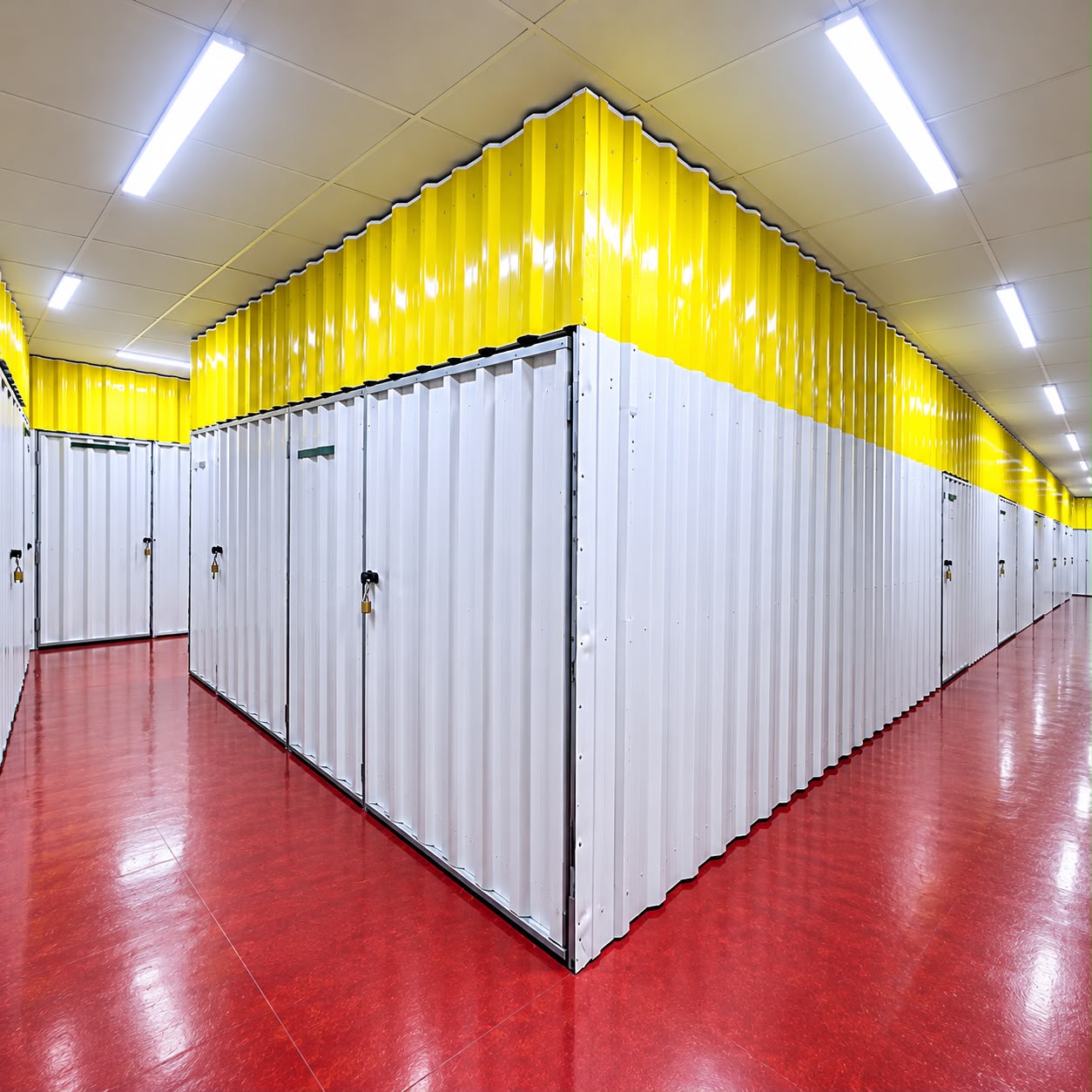
The aisle is non-negotiable. Leave at least a body-width walkway down the middle or along one side. It costs you a little floor space, but it saves you from the classic “I need box 14 so I’ll move boxes 1 to 13” disaster. If you can reach every box without moving another, you’ve nailed it.
Step 3: Build Your System (Boxes, Shelves and Labels)
Use Uniform Boxes
Mismatched boxes stack like a Jenga game designed by someone who hates you. Pick two or three sizes and stick with them. Heavy items (books, tools) go in small boxes. Light items (linen, cushions) go in large ones. Anything you can’t lift comfortably is too heavy, so repack it.
Add Shelving If You Can
Freestanding metal shelving is a game changer. It creates built-in aisles and lets you see labels without unstacking. If you have a lot of small items, shelving often earns back its cost in time saved.
Label like You’re Writing for a Stranger
Pretend a mate who’s never seen your stuff has to find the Christmas lights. Label two sides of every box (the front and the top), and write:
- A box number
- A short contents list (“Kitchen: baking trays, mixing bowls”)
- A priority colour (green for Gold, yellow for Silver, red for Bronze)
Skip vague labels like “Misc” or “Stuff”. Future you will not forgive past you.
Keep a Master Inventory
Here’s the secret weapon. Create a simple spreadsheet or phone note with every box number, its contents, and its zone. Snap a photo of each box’s contents before sealing. Then, when you need your child’s school certificates, you search “certificates”, see “Box 22, Silver Zone, left shelf”, and walk straight to it.
Add a floor plan photo too. It takes ten seconds and works wonders.
Step 4: Pack Smart by Item Type
Not everything behaves the same in storage, especially in the UAE climate. Here’s how to treat the big categories.
Furniture
Dismantle what you can, wrap legs and corners, and store sofas on their end if the unit height allows. Leave breathing room between pieces and use breathable covers, not plastic wrap, which can trap moisture. For wooden and leather pieces, proper furniture storage in Abu Dhabi with a stable environment makes a real difference. Place large furniture in the Bronze Zone at the back, then use it as a “shelf” for lighter items on top (with a protective layer between).
Documents and Records
Paperwork is the thing people lose first and need most urgently. Use sturdy, lidded archive boxes, label by year and category, and keep a separate index. If you’ve got a lot of records, consider dedicated document storage in Abu Dhabi, where files are kept in better conditions than a general-purpose corner of a unit.
Business Stock and Equipment
For a business, the access plan is basically your warehouse management system in miniature. Put fast-moving stock near the door, slow movers deeper, and keep a clear pick path. Proper business storage in Abu Dhabi lets you scale up and down as your inventory changes, without paying for a whole warehouse.
Delicate and Sensitive Items
Electronics, instruments, artwork, leather goods and anything made of natural fibres don’t love Abu Dhabi’s swings in heat and humidity. A climate controlled storage unit in Abu Dhabi keeps temperatures and moisture steadier, which protects these items and lets you pack them closer to the front without worry.
Step 5: Match Your Access Plan to Your Situation
Your life dictates your layout. Here are three common scenarios and how to handle them.
Scenario A: Storing While You Move House
Moves are chaotic. Gaps between handover and move-in can run weeks. In this case, you’ll probably want quick access to a few things (kitchen basics, kids’ school stuff, work gear) while the rest sleeps at the back. Our guide on storage while moving house goes deeper, but the golden rule is: pack an “essentials” box and park it right at the door.
Scenario B: Storing During a Renovation
Renovations are dusty, noisy and unpredictable. Store everything you don’t need now, and plan for what you’ll want first when the work wraps up (usually kitchen items and bedroom furniture). Check out our notes on storage during renovation, and keep a “first back in” section near the front so you can restock your home room by room.
Scenario C: Expat Moves and Overseas Postings
Expats have a particular challenge: stuff you might need quickly if plans change, and stuff you won’t see for years. If you’re in a contract or transition phase, expat storage in Abu Dhabi with a clear zone system means you can retrieve a winter coat for a Europe trip without unpacking the whole unit. Keep an up-to-date inventory you can access remotely, since you might be across the world when you need to find something.
Choosing the Right Location for Easy Access
The best access plan in the world is useless if the unit is a nightmare to reach. Think about where you’ll be coming from.
If you live in the south-east of the city, storage in Khalifa City keeps trips short, which matters if you plan frequent visits. For families around the Al Reef community, storage in Al Reef is a handy option close to home, which makes dropping in for the odd box far less of a chore than crossing town in peak traffic.
A good rule: the more often you’ll visit, the closer the unit should be.
Common Storage Organisation Mistakes (and How to Dodge Them)
After years of seeing how units get packed, these are the repeat offenders:
- No aisle. The unit looks full and impressive, and then nobody can reach anything.
- Packing by room, not by access. Your rarely-used dining set shouldn’t block your seasonal gear.
- Heavy boxes on top. Gravity wins every time. Heavy goes low, light goes high.
- Skipping the inventory. “I’ll remember” is famous last words.
- Pressing furniture flat against walls. Leave a small gap for airflow.
- Over-packing the unit to save money. Squeezing into a unit that’s too small usually costs more in frustration than a size up.
- Ignoring climate. Some items simply don’t cope with heat and humidity. Protect them properly.
How Much Space Do You Actually Need?
Here’s the awkward truth: a tight unit with no aisle isn’t “efficient”. It’s a trap. A good access plan usually needs 10 to 15 percent more floor area than a crammed pack-out, but you’ll spend far less time and stress retrieving things.
If you’re unsure about size, use the storage cost calculator to estimate what you need and what it will cost. And if you’d rather chat it through with a real person, get in touch with the Simple Storage team and we’ll help you size up without overpaying.
Your Quick Access Plan Checklist
Before you shut that unit door, run through this:
- Items sorted into Gold, Silver and Bronze tiers
- A clear aisle, with every box reachable
- Heavy items low, light items high
- All boxes numbered and labelled on two sides
- A master inventory (digital) plus photos
- Delicate items protected from heat and humidity
- “Essentials” and “first back in” boxes near the door
- A copy of your zone map saved on your phone
Tick all eight and you’re running a storage unit better than most warehouses.
FAQs
How often should I reorganise my storage unit?
Do a quick review every six months, or whenever your needs change (new job, new home, post-renovation). A 20-minute tidy keeps the zones honest, because things you thought were “rarely needed” often creep into regular use.
Is it worth paying for shelving inside a unit?
For most people with lots of small items or boxes, yes. Shelving makes everything visible and reachable and lets you stack higher safely. If you’re only storing a few large furniture pieces, you probably won’t need it.
What’s the best way to label boxes so I can find things fast?
Use numbered boxes with a short contents description and a colour code for your zone. Always label two sides, and keep a matching digital inventory. The number links the box to your list, so you can find it in seconds.
Can I store documents and furniture in the same unit?
You can, but think about conditions. Furniture is bulky and needs airflow, while documents are sensitive to moisture and dust. If your paperwork matters, store it in sealed archive boxes, away from walls and the floor, or consider keeping it separately in dedicated document storage.
How do I plan access if I’m leaving Abu Dhabi for a while?
Pack with a long-term mindset: tight stacking for items you won’t touch, and a small “just in case” section near the door for anything you might need to send for. Keep your inventory in a cloud document and tell a trusted contact where it lives, so someone can help if you need something retrieved while you’re abroad.
Does climate control really make a difference for organisation?
Indirectly, yes. When you know your items are protected, you can organise purely around access instead of hiding delicate things in the “safest” corner. That frees you to put frequently-used items at the front without worrying.
Final Word: Plan the Access, Not Just the Space
A storage unit shouldn’t feel like a black hole where belongings go to disappear. With a bit of planning (zones, an aisle, decent labels and a proper inventory), it becomes a tidy extension of your home, one you can navigate half asleep.
Whether you’re juggling a move, a renovation, an overseas posting or a growing business, the team at Simple Storage is happy to help you set up a layout that works. Pop over to the contacts page and let’s get your boxes sorted, so the only hunt left is for a decent flat white.